




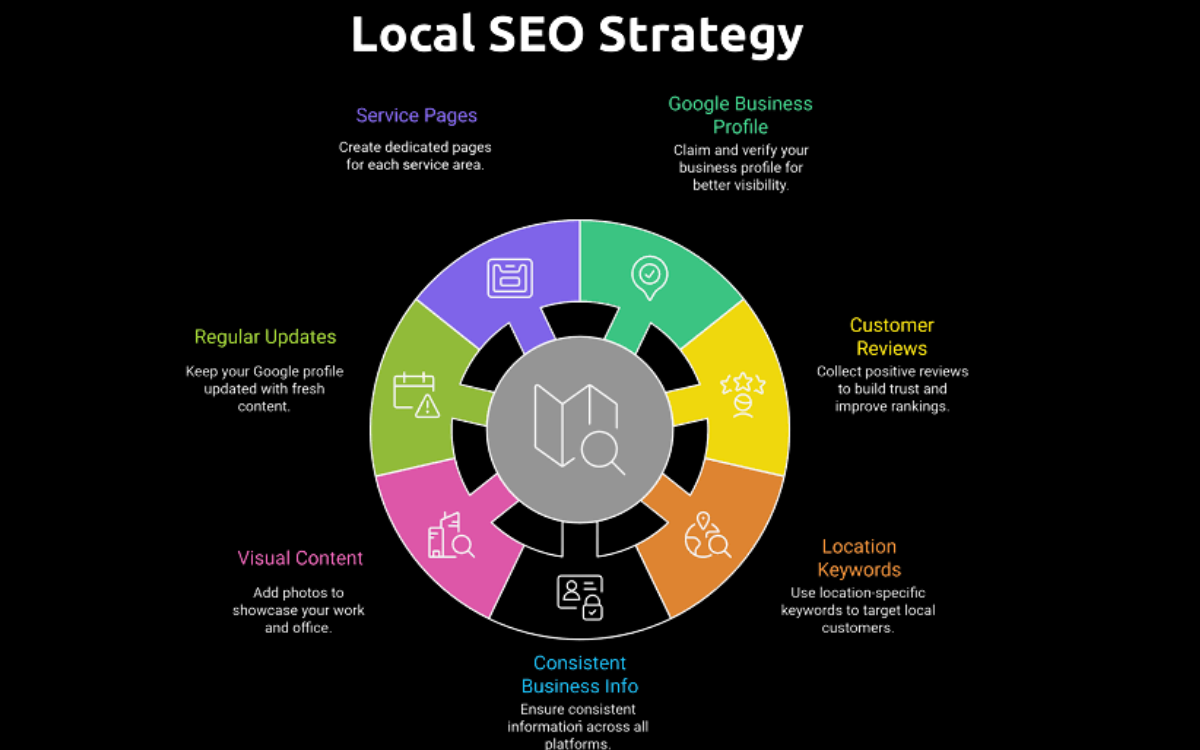
Manufacturing has changed significantly in recent years. Buyers who once relied heavily on trade shows, referrals, catalogs, and sales representatives now turn to Google to research suppliers, compare capabilities, and find companies that can meet their production needs. Whether they need CNC machining, metal fabrication, injection molding, industrial equipment, or custom components, the search often starts online.
That shift makes Marketing For Manufacturing Companies increasingly dependent on strong local visibility. Having an excellent facility, experienced employees, and high-quality products is not enough if potential customers cannot find your business when they search for a supplier in their area.
Local SEO gives manufacturers an opportunity to appear in front of relevant prospects at the moment they are actively looking for products or services. By optimizing your Google Business Profile, website, location pages, reviews, content, and online listings, you can increase visibility and generate more qualified inquiries from your target markets.
What Is Local SEO for Manufacturers?
Local SEO focuses on improving a company’s visibility for searches connected to a specific geographic area. Instead of trying to rank only for broad terms such as “CNC machining” or “metal fabrication,” manufacturers can also target searches such as:
- CNC machining companies near me
- Custom metal fabrication in Texas
- Industrial equipment manufacturers in Ohio
- Plastic injection molding companies near me
- Manufacturing suppliers in New York
This approach is especially useful for manufacturers that serve particular cities, states, regions, or industrial markets.
Traditional SEO can help a manufacturer reach customers across the country or internationally, while local SEO focuses on connecting the business with nearby or location-specific buyers. When used together, these strategies can create a stronger and more balanced search presence.
1. Optimize Your Google Business Profile
Your Google Business Profile is one of the first places potential customers may encounter your company in local search results.
Make sure your profile includes accurate business information, including your company name, address, phone number, website, operating hours, business category, services, and photos.
Manufacturers should be particularly specific when describing their capabilities. Rather than simply listing “manufacturing,” mention services such as CNC machining, precision fabrication, injection molding, welding, industrial automation, custom parts production, or equipment manufacturing.
Upload high-quality images of your facility, equipment, team, products, and completed projects. These visuals can give potential buyers a better understanding of your capabilities before they ever contact your sales team.
Keep your profile updated whenever your business information or services change. Regular updates can also help keep your listing useful and relevant to potential customers.
2. Research Location-Based Keywords
Manufacturers often focus heavily on product and service keywords while overlooking location-based searches.
For example, “CNC machining services” is a useful keyword, but a buyer searching for a supplier in a particular market may use a much more specific phrase such as “CNC machining company in Dallas.”
Other examples include:
- Precision machining in Houston
- Metal fabrication company in Chicago
- Industrial manufacturers in Ohio
- Custom parts manufacturer in Texas
Research the locations where your company actually does business and identify the services customers are searching for in those areas.
Avoid creating content simply to insert city names. Location targeting works best when the content genuinely provides value to customers in that market.
Use keyword research to understand search demand, but always write for the buyer first. A page that answers real customer questions is more valuable than one filled with repetitive location phrases.
3. Create Dedicated Service and Location Pages
A strong manufacturing website should make it easy for both users and search engines to understand what you offer and where you operate.
If you provide CNC machining and serve several major markets, you could create relevant pages such as:
- CNC Machining Services in Dallas
- CNC Machining Services in Houston
- Precision Manufacturing in Austin
- Custom Metal Fabrication in Chicago
Each page should contain original information. Explain your capabilities, equipment, materials, industries served, quality standards, service area, and reasons customers should consider your company.
For example, a location page for CNC machining in Dallas could discuss the types of components you produce, materials you work with, industries you support, production capabilities, quality control processes, and how customers in the region can request a quote.
Avoid publishing dozens of nearly identical location pages with only the city name changed. Thin or repetitive content does little to help visitors and can reduce the overall quality of your website.
4. Maintain Consistent Business Information
Your business name, address, and phone number commonly referred to as NAP information should remain consistent across the internet.
Check your website, Google Business Profile, social profiles, industry directories, chamber of commerce listings, and manufacturing directories.
For example, if your official business name is “ABC Manufacturing LLC,” avoid using several unrelated versions of the company name across different platforms.
Also check for old addresses, discontinued phone numbers, duplicate listings, and outdated websites. Consistent information makes it easier for search engines and customers to identify the correct business.
Create a simple list of all major online profiles and review them periodically. Correcting outdated information can also prevent potential customers from calling an incorrect number or visiting an old location.
5. Generate Genuine Customer Reviews
Reviews are particularly important for manufacturing businesses because buyers want confidence before choosing a supplier.
A procurement manager may evaluate your production capabilities, but they may also want to know whether your company delivers on time, communicates effectively, maintains quality, and solves problems professionally.
Ask satisfied customers to leave honest reviews on your Google Business Profile. You can send a review request after successfully completing an order, project, installation, or major milestone.
Make the process simple by providing customers with a direct review link and a short explanation of why their feedback is valuable.
Never purchase fake reviews or ask customers to publish misleading feedback. Authentic reviews provide much stronger credibility.
Encourage customers to describe their genuine experience naturally. Mentions of specific services, products, industries, or locations can also provide useful context about your business.
6. Build Relevant Local and Industry Citations
Citations are online references to your business, often containing your company name, address, phone number, and website.
Manufacturers should look beyond general business directories. Relevant opportunities may include:
- Manufacturing associations
- Industry directories
- Trade organizations
- Local chambers of commerce
- Supplier directories
- Industrial publications
- Regional business organizations
Quality matters more than quantity. Getting listed on reputable, relevant websites is generally more valuable than submitting your company to hundreds of unrelated directories.
Start by identifying industry organizations and local business platforms that your target customers already trust. Make sure your information is accurate before submitting your company.
7. Publish Content That Addresses Local Buyer Needs
Local content can help manufacturers demonstrate expertise while targeting specific markets.
Instead of producing generic articles, consider creating content around real customer questions and regional challenges.
Examples include:
- How to Choose a CNC Machining Company in Texas
- Manufacturing Challenges Facing Midwest Businesses
- What to Consider When Choosing a Local Fabrication Partner
- Manufacturing Trends Affecting California Businesses
- How Local Manufacturers Can Reduce Production Delays
Case studies can be particularly effective. Explain the customer’s challenge, your approach, the manufacturing process, and the result.
For example, you could create a case study showing how your company helped a regional equipment manufacturer improve component quality or reduce production delays.
This type of content gives prospective buyers practical information while demonstrating your technical expertise and understanding of the local market.
8. Make Your Website Mobile-Friendly
Local searches frequently happen on mobile devices. A potential customer may search for a supplier while traveling, visiting an industrial facility, attending an event, or researching vendors outside normal office hours.
Your website should load properly and provide a smooth experience across smartphones, tablets, and desktops.
Make important information easy to find, including:
- Phone numbers
- Service pages
- Contact forms
- Location information
- Directions
- Quote-request options
- Business hours
Buttons should be easy to tap, forms should be simple to complete, and important content should not be hidden behind complicated navigation.
A mobile-friendly website also supports better overall user experience, which is important for broader SEO performance.
9. Improve Your Website Structure and User Experience
Your website plays a major role in turning local search visitors into potential customers. A well-organized site should make it easy for visitors to understand your manufacturing capabilities, find relevant services, and contact your team.
A strong Manufacturing Website Development approach should focus on clear navigation, fast-loading pages, mobile responsiveness, detailed service information, location pages, technical specifications, case studies, and simple quote-request forms.
Internal links can also help visitors discover related content. For example, a blog about CNC machining can link to your CNC machining service page, while a location page can connect visitors with relevant capabilities and industry solutions.
Use descriptive anchor text such as “CNC machining services” instead of generic phrases such as “click here.” This helps users understand where the link will take them and gives search engines additional context about the relationship between your pages.
Your website structure should also follow a logical hierarchy. Important service pages should be easy to reach from the main navigation, while supporting blogs and case studies can provide additional information and link back to those core pages.
10. Focus on Conversion Optimization
Getting visitors to your website is only part of a successful local SEO strategy. The next step is turning those visitors into inquiries, quote requests, phone calls, and sales opportunities.
This is where Manufacturing Business Conversation Rate Optimization becomes important.
Review your website from the perspective of a potential manufacturing buyer. Can visitors quickly understand what you produce? Can they find your capabilities, certifications, industries served, and service areas? Is it easy to request a quote?
Use clear calls to action such as:
- Request a Quote
- Talk to an Engineer
- Contact Our Team
- Discuss Your Project
- Get a Manufacturing Consultation
Adding customer testimonials, project examples, certifications, technical information, FAQs, and clear explanations of your production process can also help build confidence.
Consider reducing unnecessary form fields as well. If a prospect only needs to provide basic project information to start a conversation, asking for too many details at the beginning can discourage them from submitting the form.
The goal is to remove unnecessary barriers and make it easy for qualified prospects to take the next step.
11. Earn High-Quality Local and Industry Backlinks
Backlinks from relevant and trustworthy websites can strengthen your website’s authority.
Manufacturers can look for opportunities through:
- Industry associations
- Trade publications
- Supplier partnerships
- Local business organizations
- Manufacturing events
- Regional news websites
- Industry directories
For example, participating in a local industry event, contributing technical expertise to an industry publication, or being featured in a manufacturing association’s member directory may create valuable opportunities for online mentions and links.
You can also publish original research, technical guides, manufacturing insights, or case studies that other websites may want to reference.
Focus on relevance and credibility rather than collecting large numbers of low-quality backlinks.
12. Track Your Local SEO Results
Local SEO should be monitored regularly so you know which activities are producing results.
Track metrics such as:
- Local organic traffic
- Keyword rankings
- Google Business Profile interactions
- Phone calls
- Contact form submissions
- Quote requests
- Direction requests
- Leads by location
- Leads by service
Google Analytics and Google Search Console can provide useful information about how people discover and interact with your website.
You can also compare performance by location. If one city produces significantly more quote requests than another, you may want to investigate what is working well in that market and apply similar strategies elsewhere.
Do not focus only on traffic. For a manufacturing company, a smaller amount of highly qualified traffic can be more valuable than thousands of visitors who have no purchasing intent.
Why Local SEO Matters for Manufacturers
Manufacturing buyers are becoming increasingly self-directed. Before contacting a supplier, they may research capabilities, compare competitors, read reviews, review case studies, and evaluate websites.
If your company does not appear during that research process, another manufacturer may receive the opportunity.
Local SEO helps close that visibility gap. A well-optimized online presence can put your business in front of people who are already searching for the products and services you provide.
The key is to combine several activities rather than relying on a single tactic. Google Business Profile optimization, location-focused content, reviews, citations, backlinks, technical SEO, and conversion improvements work together to create a stronger digital presence.
Manufacturers should also remember that local SEO is an ongoing process. Search behavior, competitors, customer expectations, and Google search results continue to change. Regular updates and performance analysis are necessary to maintain visibility.
Conclusion
Local SEO is much more than adding city names to web pages. It is about creating a trustworthy online presence that clearly tells Google and potential customers who you are, what you manufacture, which industries you serve, and where you operate.
Start by optimizing your Google Business Profile and correcting inconsistent business information. Then build useful service and location pages, collect genuine reviews, publish valuable local content, strengthen internal links, and earn relevant industry backlinks.
Most importantly, make your online presence useful from the customer’s perspective. Provide enough information for buyers to understand your capabilities, demonstrate your expertise through real examples, and make it simple for qualified prospects to contact your team.
As more manufacturing buyers use Google to research suppliers, companies with a clear and consistent local search strategy can gain an important competitive advantage. By focusing on useful content, accurate information, customer trust, and continuous improvement, manufacturers can turn local search visibility into a reliable source of qualified business opportunities.
