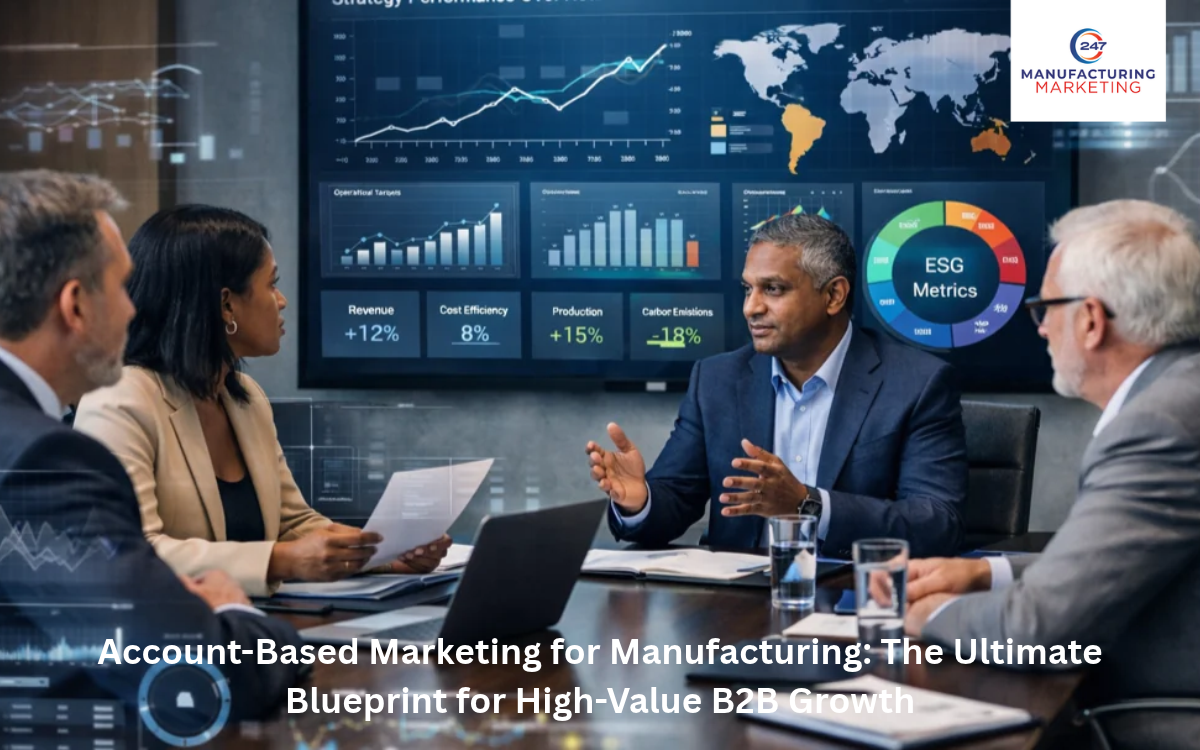
Marketing industrial products and specialized technical equipment is rarely a quick win. Manufacturers face uniquely steep hurdles: multi-month (or multi-year) buying cycles, technical buyer personas, and complex purchasing committees that include engineering, procurement, operations, and finance teams. In fact, recent research highlights that more than half of B2B buyers have seen their purchasing timelines stretch even longer over the past year.
When broad-net tactics fall short, forward-thinking leaders turn to a specialized Manufacturing Digital Marketing Agency to deploy precision strategies like Account-Based Marketing (ABM). Rather than casting a wide, generic net across millions of low-intent leads, ABM functions like a sniper scope, focusing your sales and marketing energy on a curated list of high-value target accounts.
Below is a detailed guide exploring how Account-Based Marketing transforms B2B manufacturing outreach and how you can implement it step-by-step to boost deal sizes, shorten sales cycles, and drive sustainable growth.
Why Traditional B2B Marketing Fails Industrial Manufacturers
Standard digital marketing often relies on volume generating massive lead lists through eBooks, broad social media ads, or general newsletters. However, industrial buying processes present hurdles that generic inbound tactics cannot overcome alone:
- Lengthy, Multi-Touch Sales Cycles: Large-scale equipment, custom fabrications, and enterprise software solutions require months of deliberation and continuous touchpoints.
- Multiple Stakeholders with Conflicting Goals: Plant managers prioritize operational efficiency and minimal downtime, engineers demand exact technical specs, and procurement teams focus strictly on cost and ROI.
- Niche, Highly Technical Audiences: Industrial messaging must address precise technical specs and operational pain points. Generic promotional copy fails to engage technical experts.
By shifting to an ABM framework, manufacturers focus strictly on high-yield opportunities. Studies show that B2B organizations implementing ABM report up to a 171% increase in average deal size, proving its power in complex industrial markets.
The Strategic Core: How ABM Delivers Industrial Value
Account-Based Marketing reverses the traditional marketing funnel. Instead of capturing a broad audience and filtering them down to qualified leads, you start with your ideal target accounts and build customized journeys around them.
Key Benefits of ABM for Manufacturers
- Prioritizing High-Value Accounts: Maximize your return on investment by concentrating on budgets where conversion probability and contract values are highest.
- Tight Sales and Marketing Alignment: Unify sales insights and marketing messaging so every customer touchpoint remains consistent.
- Tailored Messaging for Niche Pain Points: Replace broad feature lists with hyper-focused solutions such as demonstrating how a component reduces machine downtime or cuts energy overhead.
7 Steps to Implement ABM in Your Manufacturing Business
Building an effective ABM initiative requires a structured execution strategy.
1. Identify and Score High-Value Accounts
Analyze your existing customer database to define your Ideal Customer Profile (ICP). Segment target accounts by industry verticals, annual revenue, machinery setup, geographic region, and historical buying behaviors. Use sales intelligence platforms (like Apollo) to score accounts based on fitness and revenue potential.
2. Conduct In-Depth Account Intelligence
Map out the buying committee within each targeted organization. Identify the key decisionmakers across engineering, operations, and procurement, studying their specific business objectives and operational friction points.
3. Align Sales and Marketing Operations
Establish unified KPIs across both teams, focusing on account engagement rates, pipeline velocity, and target deal closure rates. Schedule weekly syncs and centralize account tracking in a unified CRM to ensure full visibility into every prospect interaction.
4. Craft Hyper-Personalized Campaigns
Create account-specific content, such as technical whitepapers, ROI calculators, custom case studies, and solution briefs. Leverage buying intent triggers such as facility expansions, new funding rounds, or leadership changes to initiate timely outreach.
5. Deploy Multi-Channel Campaigns
Combining Marketing Automation for Manufacturers with personalized manual touchpoints enables your team to deliver automated ad displays, tailored email sequences, and direct sales outreach without losing the human touch. Platforms like HubSpot streamline campaign workflows across email, web landing pages, and retargeting ads.
6. Track Account Engagement and Pipeline Metrics
Monitor account-level activity across all channels rather than tracking isolated lead clicks. Focus on overall account engagement scores, website visits from target IP addresses, email interaction depth, and pipeline progression.
7. Continuously Optimize Strategy
Conduct quarterly reviews to assess deal velocity and channel ROI. Refine your ICP parameters based on real-world conversions and experiment with new content formats to maintain a competitive edge.
Essential Technology Stack for ABM Success
Modern ABM relies on a well-integrated technology stack to automate processes and deliver real-time data insights:
| Tool Category | Key Function | Popular Platforms |
| Sales Intelligence | Account discovery, contact enrichment, and org charting | Apollo, ZoomInfo |
| Marketing Automation | Automated workflows, lead tracking, and content delivery | HubSpot, Marketo |
| Predictive Analytics | AI data modeling to detect buyer intent signals | 6sense, Demandbase |
| CRM Systems | Centralized database for account tracking and sales activities | HubSpot CRM, Salesforce |
| Account-Based Ads | IP-targeted ad delivery to key decisionmakers | LinkedIn Campaign Manager, Terminus |
Building Trust and Engagement Across Channels
Reaching industrial decisionmakers requires meeting them where they spend their professional time. Utilizing Social Media for Manufacturing Companies allows B2B marketers to build authority, showcase technical capabilities, and nurture executive-level relationships.
By sharing video tours of manufacturing facilities, client testimonials, product stress-testing demonstrations, and thought leadership articles on platforms like LinkedIn, manufacturers can build credibility with buying committees throughout extended consideration phases.
Accelerating Growth with Dedicated ABM Expertise
Transitioning from traditional inbound tactics to an account-based model requires expertise in data integration, content personalization, and alignment between sales and marketing teams. Partnering with specialist growth teams like Think Fuel equips manufacturers with tailored strategies, seamless technology integration (such as HubSpot and Apollo), and continuous optimization to maximize campaign ROI and revenue growth.
Transform Your Industrial Marketing Strategy Today
In an increasingly competitive landscape, relying on broad-net marketing tactics is no longer enough. ABM provides the focus, precision, and alignment required to win complex, high-value B2B manufacturing contracts. By prioritizing key accounts, delivering personalized experiences, and deploying the right tools, manufacturers can shorten sales cycles and build lasting customer relationships.
Would you like assistance developing an Ideal Customer Profile (ICP) framework or mapping out an account-based email outreach sequence tailored to your manufacturing niche?
Conclusion:
The traditional, scattergun approach to industrial marketing is no longer sustainable in a digital-first marketplace defined by long buying cycles and complex stakeholder committees. Guesswork your resources through Account-Based Marketing, you replace guesswork with precision, turning niche technical audiences and high-value accounts into long-term enterprise partners.
Implementing ABM isn’t an overnight fix, but its rewards ranging from drastically higher average deal sizes to fully aligned sales and marketing teams make it the ultimate catalyst for modern B2B manufacturing growth. Whether you choose to build your strategy internally or partner with an experienced agency, the time to shift from broad lead generation to targeted account engagement is right now.
Ready to transform how your industrial brand wins high-value contracts? Take the first step today by auditing your current pipeline, defining your ideal customer profile, and putting account-level focus at the heart of your growth engine.